
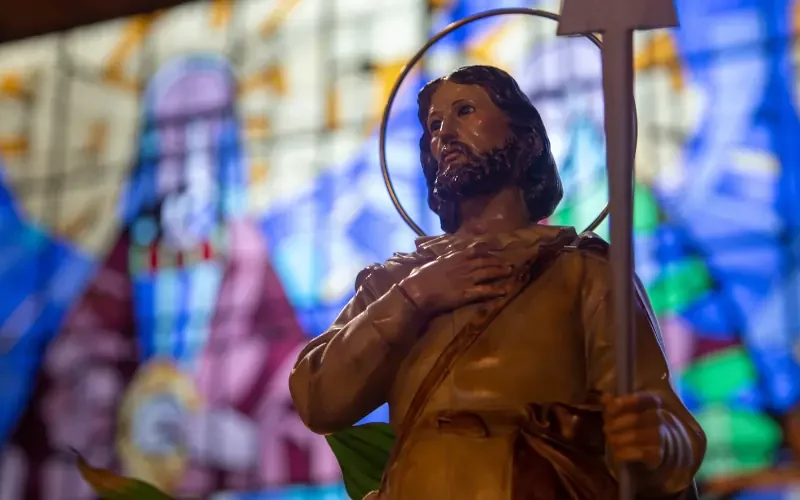
If you’re trying to sell a home in Georgia, you’ve probably seen people talk about burying a St. Joseph statue to help. The tradition shows up everywhere, from real estate forums to local shops. In many cases, it’s framed as the “last resort” for homes that just won’t sell, or for a home sale that keeps stalling or falling through.
Homeowners in Georgia who are considering this option likely have some questions. The question, though, is whether the strategy actually makes a difference in how it sells on the market. In this article, we’re going to look at the St. Joseph statue ritual through a bit more of a practical lens. We’ll cover where the tradition came from originally, how different people do it, and how it compares to traditional real estate transactions in terms of pricing and timing. Faith is important to many sellers, but results generally depend on more than devotion.
The Legend: Why St. Joseph is the Patron Saint of Real Estate
Saint Joseph is the Catholic patron saint of families and workers. Over time, he has also become known as the patron saint of real estate and the home. This didn’t come from any formal doctrine about buying or selling property. Rather, it grew out of much broader Catholic Church traditions that see Joseph as the protector of the home and as the provider for the Holy Family.
Religious traditions will often change and evolve through practice, instead of through official instruction or church doctrine. The St. Joseph legend is no different. Stories passed down through religious communities linked Joseph’s care for home and family to help with major life transitions. That link was what eventually expanded to include this real estate ritual, especially during difficult markets or listings that are getting dusty on the market.
Catholic theology places a huge emphasis on trust, patience, and humility, instead of on transactional, guaranteed outcomes. Even more modern leaders like Pope Francis have spoken about faith being a tool for guidance, not for control. When it comes to the Georgia real estate market, that’s an incredibly important distinction to make. The legend and ritual help offer comfort, but they were never meant to be a practical replacement for an effective pricing strategy or a clear grasp of the current market conditions.
How to Bury the Statue Correctly in Georgia Soil (The 4 Rules)
Most St. Joseph statue instructions focus on a small set of rules rather than prayer alone.
First, sellers are told to use a St. Joseph statue made from a durable resin/stone mix rather than a fragile garden statue. The statue is typically placed inside a plastic bag to protect it from moisture before burial.
Second, the statue is buried upside down. Tradition says it should face the house, usually near a for-sale sign or front walkway, where real estate activity is focused. A small garden shovel or garden trowel is commonly used, and the hole doesn’t need to be deep. The emphasis is on placement, not excavation.
Third, the burial of statues is often paired with visible effort. Sellers are encouraged to keep the yard presentable, maintain curb appeal, and continue showing the home.
Finally, instructions usually stress patience. Many rituals reference a 30-day window, but results vary widely.
These burial instructions are part ritual and part routine. Following them doesn’t change appraised value or contract terms, but it can give sellers a sense of momentum while waiting for offers to come in.
No Yard? The “Flower Pot Method” for Condos and Townhomes
The ritual is pretty clear that you should bury the statue, but what about condominium and townhome owners? Well, there’s a hack for that. Condos, townhomes, and properties with strict HOA regulations and nosy neighbors need an approach where they don’t need to dig a hole in the ground. For that, the flower pot method is perfect. Rather than bury the statue in the ground, sellers place the statue in a flower pot or planter filled with soil. It’s then kept on a balcony or near the entryway of the home. This workaround keeps the ritual deeply symbolic, while still keeping sellers compliant with restrictions on modifying their property.
In most cases, the statue comes with a small holy card or prayer booklet. This can be included in the bag with the statue if you choose. After that, some sellers choose to sprinkle a few drops of holy water over the soil. This keeps a close parallel with the outdoor version, again, without violating any rules. A critical point for sellers in condo-heavy areas like Midland and Fortson. This keeps you from having to dig in a yard, but it doesn’t alleviate the pressures of typical market realities, like pricing, location, and buyer demand.
The Prayer: Which Novena Should You Recite Daily?
Unless you buy your statue used or find one somewhere, it should come with a prayer card or book. This is often in the form of a novena, which is a prayer you use for nine days straight. The consistency is incredibly important, as is the intention when praying.
There’s no universal prayer to St. Joseph, nor are there any requirements for wording or timing. Some sellers pray once a day, while others may do it multiple times. Some may simply read their prayer as a way to center themselves each morning, or before each call with their realtor. You want to make sure that whatever prayer you do choose, you stay consistent with it for the full nine days, or as long as it takes your home to sell.

The Most Critical Rule: Retrieving the Statue After Closing
While it’s not so much a rule as it is a sign of respect and thanks, it’s also the most overlooked step in the ritual. Traditional ritual instructions say the statue should be dug up once the home sells. This is why most statue kits include a plastic bag to help protect the statue and anything included with it during the time it’s buried.
From a religious standpoint, the rule isn’t enforced in any practical way. Pope Leo isn’t going to send the Vatican police to your house to tear up your contract. The practice, like many others, comes from custom, not command. Leaving it buried won’t harm your sale, just like burying it in the first place won’t guarantee a transaction.
Does It Actually Work? (Faith vs. Market Conditions)
Asking if the statue works will heavily depend on what you mean by “works”. The ritual won’t change the market for you, and it won’t shift buyer demand. In no way will it impact your home’s appraised value or the taste of the buyers. Your home will still sell based on its price, condition, neighborhood, and market timing. At best, you’re praying for divine intervention to guide a qualified buyer your way without waiting for them to find the listing on their own.
However, that doesn’t mean that the ritual doesn’t hold value. For many sellers, it creates structure during uncertainty. It provides emotional momentum so sellers don’t spiral.
Why Your House Still Isn’t Selling (Even With St. Joseph)
If your house isn’t selling, it’s not because St. Joseph has decided you’re not worthy of his help. The reason is usually far more practical and earthly. Pricing that seems out of place in the current market is a big reason. Too high and you scare people off, but price too low and buyers envision a project property with untold hidden damage.
Market research matters a lot. Just putting up a yard sign or listing on a single platform only gives you a slice of visibility. Powerful, successful listings blend curb appeal with professional photos and market exposure across multiple platforms.
Condition is another reason your listing may not be moving. Cluttered or hoarded properties, or properties that need repairs, like a water or fire-damaged house, all need different approaches to selling.
Why Assured Property Solutions is Faster Than Divine Intervention
It’s not uncommon for homeowners to simply reach a point where they can’t wait for a buyer any longer. If showings are slow, if offers have fallen apart previously, or if you’re just under a time crunch and need to get things moving, a direct sale can help. Selling to Assured Property Solutions can eliminate most of the variables and all of the delays that suffocate traditional real estate sales.
You won’t need to deal with or even hire a real estate agent. There’s no stressing over ongoing negotiations or hassles with buyer financing and lender delays. Forget about paying for an inspection or any of the usual costs associated with selling, like staging. You simply get a cash offer, based on current conditions, and then you move forward when you’re ready.
Conclusion
While there’s certainly no way to objectively measure the impact of burying a St. Joseph statue, it undoubtedly brings comfort to those who use it during what can be one of life’s most stressful transitions. For countless Georgia sellers, the St. Joseph ritual provides structure and a sense of hope during a time when everything seems to be up in the air. For many sellers, it’s challenging to put a number on that value.
At the same time, though, selling a house will always come down to pricing, exposure, location, and demand. Faith can help support you and the process, but it can’t replace cogent strategy and timing considerations. The key is knowing when to adjust your approach and trusting in your decision. If you want to sell, but you want a solution that takes the guesswork and waiting out of the equation, we’re here to help. Reach out to Assured Property Solutions for your transparent cash offer and a simple sale that can close on your schedule.