

In Georgia, the situation of selling an inherited house calls for the appropriate paperwork. What you need in terms of documentation will depend on how the property was owned and whether the deceased had a valid will. So what documents are needed to sell an inherited house in Georgia? In the probate process, you’re going to need documents like a Death Certificate, the Will, and Letters Testamentary or Letters of Administration from the probate court. These are considered necessary to prove you have the legal authority to sell inherited property in Georgia.
As such, you’re going to need the original property deed, your photo ID, and a payoff statement that is tied to any mortgages that still exist. But what if the estate bypasses the formal probate process? That’s when you’ll need an Affidavit of Heirship or Transfer-on-Death (TOD) deed. Before you even consider transferring a property to a cash home buyer like Assured Property Solutions, you need to confirm that you have the legal authority to sell, even if you want to avoid those costly repairs and the traditional listing process that is time-consuming.
So if you recently inherited a home from a deceased family member in Georgia, whether it was in Fortson or some other place, you may be hit with the reality that you’re dealing with more than just a piece of property. Things like grief, family dynamics, and a legal process are attached to the whole thing, and it might be an unfamiliar feeling to you.
You take a look at the house from the inside and out. It needs work. Ongoing maintenance is also necessary, and the place could use a bit of cleaning. If you go the traditional route, you risk letting it sit there for a lengthy period of time while it slowly but surely drains your bank account. The reason being is that you can’t sell the house until you know for sure that you have the legal right to do so.
You’re about to know what documents are needed, how the probate process works, and the simplest way to sell an inherited property. What could be a long-term burden doesn’t have to be. So let’s begin with what you need to know before you sell property in Georgia.
The Probate Process: Do You Legally Have The Right To Sell?
Before you worry about the pricing or who may be buying the house, the question you have to answer is: Does the property need to go through the probate process? Short answer: yes. That is, if the deceased person’s name is the only one listed as the owner. So let’s go over the probate process.
First, probate is defined as the legal process by which the court verifies the will (assuming one exists). Then, they appoint someone to manage the estate, known as the executor or administrator. This person in particular handles the debts, assets, and the sale of the property (should that be the option).
Documents From the Probate Court (Letters Testamentary)
Just because you’ve been named in a will doesn’t automatically give you the authority to sell. Now that you know this, it’s important to know what to do next. This is where you file a petition with the local probate court. After approval, the court issues one of the following:
- Letters Testamentary (if there is a will)
- Letters of Administration (if there is no will)
Regardless if a will exists or not, you’ll have a critical document provided to you by the court. They will act as your legal proof stating that you have the authority to sell the home. A deal will not move forward without this document, whether you are working with a legitimate buyer or a title company. Though we may offer a fair cash offer in Midland, Assured Property Solutions needs to make sure you have the document available proving you have the legal authority to sell an inherited home in Georgia.
The Essential Checklist: Documents Needed to Sell an Inherited House in Georgia
After you have the legal authority, you’ll need to gather the necessary paperwork to close the sale. Yes, it can be an overwhelming process and many sellers get caught up here. Fair warning, you’re going to deal with a lot of documentation, and one missing piece can delay the closing. It is highly suggested that you review this checklist more than once to ensure you have everything you need. Let’s go over the following:
Proof of Identity, Death, and Ownership
- Death certificate: These need to be certified copies. It will confirm that the original owner has passed and, therefore, triggers the legal transfer process.
- Original property deed: This proves ownership while providing a legal description of the property. The title company will need this to verify a clean transfer of ownership.
- Mortgage and lien payoff documents: If the inherited property still has a mortgage, reverse mortgage, or tax liens, you will need a loan payoff statement in order to settle the debts at closing, which will likely be paid off by a portion of the sale proceeds.
Also, don’t forget that if a will exists, this can determine who inherits the property and who is the executor or administrator of the estate. The person who is responsible for managing the estate is the one who handles the sale. But if there isn’t, there is another way to go forward with the process. Once again, government-issued identification is also needed to prove that you are the real person with the legal authority to sell.
What If There Is No Will? (Using an Affidavit of Heirship)
Not every estate includes a clear will. If someone passes away without one, they are considered to have died “intestate”. Yes, it can add some additional complexities to the selling process of a property.
How an Affidavit of Heirship Works in Georgia
An Affidavit of Heirship is defined as a sworn legal statement that determines the identity of the rightful heirs of the property. In this document, it will typically include things like:
- Family history
- Name of the heirs
- The relationship to the deceased individual
One thing to note is that this document does not automatically transfer ownership. The title company can accept it so long as their signed agreements are attached to it from all heirs. From there, the sale can move forward with the appropriate requirements met. However, if there are disagreements between heirs, that’s when the process is more complex.
The Difference Between “Listing It” and Selling “As-Is”
Let’s tackle something that can confuse many sellers. Obviously, listing it and selling as-is are two different things. Those who inherit a house believe that the only process to sell the house is through traditional means. That actually doesn’t have to be the case. And there are a few reasons why you may want to reconsider the traditional route. Because you’ll be busy with:
- Cleaning out years of belongings
- Updating outdated features
- Hiring contractors for repairs
- Staging the home for showings featuring uninterested buyers
A lot of this is overwhelming, especially if you’re someone managing the estate. If you sell your home in Fortson that you inherited, why go through all of that when you can work with a direct cash buyer that can allow you to sell as is?
Why Selling to a Cash Buyer Simplifies the Estate?
For every month a house sits unsold, you’ll be hit with holding costs. Those add up over the course of the following:
- Property taxes
- Insurance
- Utilities
- Lawn care and maintenance
So if the house needs major repairs, those costs can balloon and fast. But here’s the good thing about selling as-is. A cash buyer won’t care about the state that it’s in. Knowing how to sell your home as-is doesn’t have to be a challenge. You don’t have to focus on cleaning out the entire house, fix structural issues, or worry about investing in cosmetic upgrades. We’ll handle all of that once the house is sold.
Sell Your Georgia Inherited House (Without the Hassle)
Simplicity matters if you need a clean, fast resolution in selling a house you inherited in Georgia. When working with Assured Property Solutions, you can bypass the challenges that come with the traditional listing process. Once again, you need to have the legal documents in place before we give you a direct offer. If you’re wondering how our process works, you can get in touch with us, and we’ll explain the details.
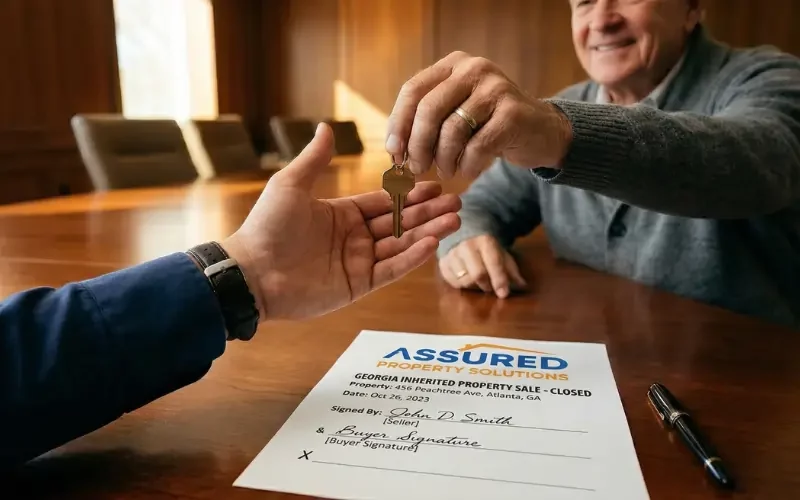
Skip the Realtor Fees and Repairs: Sell to Assured Property Solutions
When you sell an inherited home, there is no reason for it to turn into a long project. A direct offer sale provides plenty of benefits, including:
- No repairs or cleanouts required
- No agent commissions
- Flexible closing timelines
- Simplified paperwork coordination
You can take the personal items that matter to you most and leave everything else behind. After probate clears and the documents are prepared, that’s when the transaction moves forward. It will take days, not weeks or months.
Conclusion
You can sell an inherited house in Georgia fast with a direct cash buyer. Before you do that, you’ll need to navigate through the probate process, get the legal documents, and be able to manage the ongoing costs temporarily while the property sits. You can avoid repairs, skip months of holding costs, and keep things simple with Assured Property Solutions. To learn more about what we do, contact us today.
Frequently Asked Questions
Can I sell an inherited house before probate is finished in Georgia?
No. You cannot officially close the sale until probate is complete and you receive the legal authority to sell. However, you can prepare the property, gather documents, and secure a potential buyer while waiting for court approval.
Do all heirs have to agree to sell an inherited property?
Yes. If there are multiple heirs that inherit the property, all of them must agree to the sale. If one refuses, the others may pursue a partition sale, which can delay the process.